Stocks, bonds? In 2014, think cash

Written By limadu on Senin, 06 Januari 2014 | 22.16

stocks and bonds 2

Bulk up on a forgotten asset -- cash.

NEW YORK (Money Magazine)

After a five-year rally that has more than doubled the value of the S&P 500, stock prices at least by one measure of valuation are among the frothiest in history. Speculation is back, as the use of borrowed money to invest is nearing pre-financial-crisis highs. And then there's the fact it's been nearly 2 1/2 years since stock prices fell significantly. Pullbacks of 10% or more typically occur at least once a year.

Normally when faced with overheated equities, you can simply sell some winners and buy more bonds, either to get you back to your target allocation or to invest more conservatively. That strategy paid off big in the 2000-02 bear market, when the S&P 500 lost 47% while government bonds maturing over four to 10 years returned 26%.

But what happens if both stocks and bonds are primed to deliver subpar returns? That appears to be the situation now. A big reason stocks have climbed so much is that the Federal Reserve has bought up more than $2 trillion in Treasury and mortgage bonds in recent years to try to boost growth by holding down long-term interest rates and thus promote risk taking.

So-called quantitative easing has worked, but it has also driven fixed income prices up and yields down. Doug Ramsey, chief investment officer for the Leuthold Group, says, "There's now joint overvaluation in U.S. stocks and bonds."

The immediate concern: Now that the Fed has started shutting off its spigot in the face of an improving economy, the chances of rising interest rates prompting a selloff in stocks and bonds inevitably increase. Shortly after the Fed ended its two smaller rounds of quantitative easing -- in 2010 and 2011 -- the S&P 500 declined 16% and 19%, respectively. (Bond investors discounted QE's impact then, but lately they've shown they're convinced.)

The bigger long-term worry: Above-average valuations mean the likelihood of disappointing returns over the next 10 years or so.

What do you do? If you have decades to ride out the market's ups and downs, you don't have to do anything.

But if retirement is closer than that, you want a strategy that offers some protection from a bad bear market and turns down the volatility in your portfolio at a time when you're unlikely to be richly rewarded for risk taking.

Jason Brady, a portfolio manager at Thornburg Investment Management, notes: "When the price of everything goes up, it stands to reason these investments become less attractive to own."

In this article, you'll learn not only about moves you can make within your stock and bond holdings to cut risk but also about the importance of re-embracing a long-forgotten asset class -- cash. Stocks don't rise 150% every five years; bond prices don't soar when interest rates rise. So prepare for skimpier returns and higher risk.

STOCKS: More expensive than you think

A popular way to tell if stocks are cheap or dear is to look at the market's price/earnings ratio using profit forecasts for the next 12 months. Based on this method, the S&P 500's P/E is 16, which is more than 15% higher than the market's long-run average.

That's worrisome, but here's what's truly scary. If you calculate the market's P/E based not on projected profits but on 10 years of averaged earnings -- a more conservative and more reliably predictive method championed by Yale finance professor Robert Shiller -- the S&P 500's ratio is actually above 25.

Over the past 130 years, there have been only a handful of periods in which the market's P/E has hit this level: 1901, 1928 to 1930, 1996 to 2002, and 2003 to 2007, just before the financial crisis. Each of those periods gave way to (or in the case of the irrational-exuberance era, included) a ferocious bear market.

This note of caution isn't about making a short-term market call. Those periods also show that stocks can remain at frothy levels for years.

Related: Where to make money in 2014

In the current case, the S&P 500 just topped 25 in November. "Sure, valuations can go higher from here," says Robert Arnott, chairman of the investment advisory firm Research Affiliates. "But that's a game I choose not to play."

That's because the long-term bet against the Shiller P/E is a loser. Since 1926, when the market's valuation has exceeded 25, the average inflation-adjusted annual return for stocks has been a mere 0.5% over the subsequent decade. (A five-year P/E calculated by the Leuthold Group yields a better, though still bad, result.) The average annual real return for stocks is about 7%.

Your best moves

Ease up on "Fed-dependent" stocks. That's what Mark Freeman, chief investment officer at Westwood Holdings Group, calls stocks that benefited most from the Fed's super-low rate policies.

Freeman says quantitative easing, by lowering the cost of capital dramatically, has driven investors toward smaller companies that tend to be heavy borrowers. Thus far, that has worked out fine. Small-company stocks, which had been outpacing shares of large companies since 2000, got a second wind after the Fed's latest bond-buying program started in the fall of 2012.

The problem is that valuations for small caps are way up. Historically, small stocks have traded at around the same P/E as blue chips, based on five years of average profits, according to the Leuthold Group. Today they're 25% more expensive.

While small stocks outperform large ones over long periods, this isn't the time -- or the price -- to be buying up the little guys.

Dial back your small-stock exposure, says Ramsey, by the amount they're overvalued -- say, 20% to 25%, and move that into blue chips. This is actually not a big step. Assuming you hold a fairly typical blend of mutual funds, for every $100 of your money invested in U.S. stocks, around $70 will be held in large-company shares and $30 in smaller names. A 25% reduction in this case works out to around an eight-percentage-point change.

Then trim your stock allocation five percentage points or so from sectors that have directly and disproportionately gained from artificially low yields. Among them: real estate, which got a boost from record low borrowing costs, and high dividend-paying utilities, which were considered an alternative source of income in a low-rate world.

Related: Quiz: Are you a markets whiz?

If you own a REIT or utility fund through a 401(k) or IRA, selling won't trigger taxes. Own them in a taxable account, though, and you'll have choices to make. You can offset capital gains by selling some emerging-market holdings, which are largely down over the past three years. If you don't have losses and don't want a tax bill, you can start putting new money elsewhere.

Freeman recommends shifting into shares of larger multinational companies with above-average sales and earnings growth. You can find these types of companies in T. Rowe Price Blue Chip Growth (TRBCX) and Primecap Odyssey Growth (POGRX), both on the MONEY 50 list of recommended mutual and exchange traded funds.

Move some money into foreign stocks. Sharon Hill, a portfolio manager with Delaware Investments, says relative to the U.S., foreign equities are downright attractively priced. Global stocks are selling at a 20% discount to domestic shares, even though historically they've traded on par with U.S. securities. So shifting out of U.S. stocks and into the broad foreign markets is a sound way to reduce risk, she says.

But do so within reason. Vanguard studied the usefulness of foreign stocks and found something interesting: While adding international exposure gradually reduces volatility in your portfolio, the diversification benefit starts to dissipate once your overseas weighting jumps above around 40%.

If you have only minimal international exposure, shift five to 10 percentage points toward overseas holdings using a broad-based fund such as Vanguard Total International Stock (VGTSX) or Dodge & Cox International Stock (DODFX), both in the MONEY 50. If you already keep more than a third of your equities abroad, go up to 40% but no more.

BONDS: This time they're not a safe bet

Look back over the major bear markets for stocks, and in almost every case bonds did an admirable job of limiting the damage. On several occasions, in fact, fixed income delivered double-digit gains. Yet with market interest rates at such low levels thanks to Fed policy, it's hard to imagine that bonds can offer you that kind of shelter this time.

Bull markets in stocks are usually killed by rising interest rates, which also crimp bond prices. In the past, however, bond yields were high enough to compensate you for the drop in value. For example, when the Fed lifted rates in 1973, which helped trigger the equity bear market of 1973-74, 10-year Treasury notes were yielding over 7%. So even though bond prices fell that year, intermediate government bonds returned nearly 5%.

Today the math simply doesn't work. If the 10-year note's interest rate was to rise by one percentage point, a broad-market bond fund would probably lose about 6% of its value. Tack on a yield of less than 3%, and you're losing money.

That's pretty much what happened last year when investors feared the Fed would start to taper its bond-buying program. And the average long-term government bond fund, which is very sensitive to interest rates, racked up a 12% loss.

Related: Tweak your bond mix in 2014

It's not just short-term returns you have to worry about. The Leuthold Group studied the historical performance of bonds and found that there is a simple rule of thumb: Whatever the yield on 10-year Treasuries currently is, that's about the annual total return you can expect from bonds over the next decade. Today that yield is a historically low 2.8%. That's around half the average return for bonds.

Your best moves

Lend less to Uncle Sam. You can diminish risks in your bond portfolio by taking 20% to 25% of your exposure to funds with big stakes in U.S. government debt and shifting that money into other segments of fixed income.

For instance, yields on municipal bonds look relatively attractive -- especially since the improving economy is strengthening state and city finances. So, too, do high-quality corporate bonds.

Don't buy a lot of junk. Just be careful with higher-yielding securities, such as junk bonds, strategists say. When yields are low, investors tend to plow money into higher-paying stuff. But eventually all that buying drives yields down, as we've seen in the past year. Now you're often not being paid enough for the extra credit risk you're taking, except possibly with debtors classified just slightly below investment grade.

It's not just the higher possibility of default that's a problem. "You take on a different level of risk that's more highly correlated with stocks," says Mary Ellen Stanek, director of asset management for Baird.

Indeed, U.S. government bonds often go up when stocks go down. Junk historically moves more or less in sync with equities. "At the end of the day," Stanek says, "you want your bond portfolio to truly behave like a bond portfolio when it most needs to."

CASH: Bulk up on a forgotten asset

Before the Federal Reserve under Alan Greenspan hammered interest rates into the ground starting in the 1990s, cash was a part of many prudent investors' portfolios. A savings account or money-market fund lowered portfolio volatility, provided income, and allowed holders to scoop up bargains when stocks fell.

Given today's stock and bond valuations and the fact that interest rates are bound to rise, "there's nothing wrong with pulling 10% off the table and sitting in cash," says James Stack, a market historian and editor of the InvesTech Research newsletter.

This is especially true, he says, for investors who are within 10 to 15 years of retirement or are already retired.

Younger investors with more time to recover from subpar returns don't have to play as much defense. But, Stack says, they may choose to go to cash to be opportunistic -- to jump on stocks once prices fall substantially.

Greg Schultz, a principal with Asset Allocation Advisors, thinks you can go even higher -- to around 15% cash, by reducing both stock and bond holdings. That may sound radical, but even at today's depressing cash yields, many successful portfolio managers keep 5% to 10% of their assets in cash when they can't find attractively priced investments to buy.

And there are plenty of things that a stash of cash can do for you.

Your best moves

You'll turn paper profits into actual ones. Since selling winners will trigger capital gains taxes, do it in your tax-sheltered 401(k)s and IRAs as part of your rebalancing, along with the stock and bond moves suggested above. Alternatively, you can simply start putting money into an online-only bank savings account that now pays close to 1% interest and build up a position during the year.

You can hedge your bond holdings. In a rising interest rate environment, cash will progressively gain value at the same time as some of your bonds are apt to lose ground.

You'll still be in the game. Even if the stock market continues to climb, having a 10% stake in cash won't prevent you from taking part in the gains. A balanced portfolio with a 60% stock/40% bond allocation, for instance, returned 15.3% last year. Had you shifted that to a 55% stock/35% bond/10% cash allocation, you'd have earned one point less.

And you will stay strong. Because cash will cut losses and volatility, it just might help you stay the course in the rest of your portfolio, says Schultz. "Yes, there's an opportunity cost, but common sense tells you that if things are richly priced today, there will come a time when they will be cheaper," he says.

Money in the bank will help you handle the selloff while positioning yourself for the eventual rebound. To top of page

What, you worry?

There's a troubling sign that can't be ignored -- P/E ratios are above 25. This bodes poorly for future stock performance.

Average 0.5%
Worst -6.1%
Best 6.3%

NOTES: P/Es based on 10-year profits. SOURCE: AQR Capital

First Published: January 6, 2014: 9:29 AM ET


22.16 | 0 komentar | Read More

Reports: JPMorgan's $2 billion Madoff settlement to land soon

jp morgan madoff

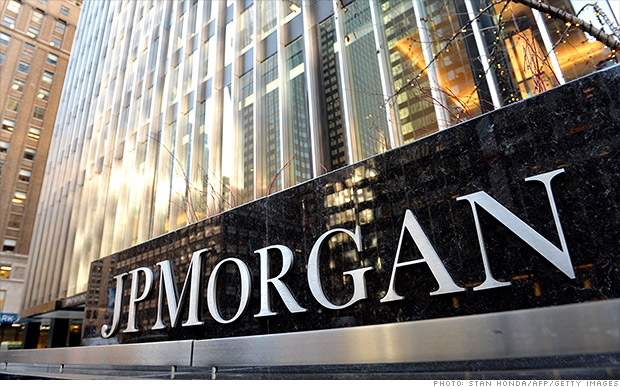
JPMorgan is expected to reach a $2 billion settlement with the feds this week for its turning a blind eye to Madoff's Ponzi scheme.

NEW YORK (CNNMoney)

The reports -- in The New York Times and Wall Street Journal -- say the deal is expected to come this week.

Federal prosecutors have accused JPMorgan (JPM, Fortune 500) of ignoring red flags about Madoff's crimes, and allegedly turning a blind eye to the largest Ponzi scheme in history.

Madoff swindled about $20 billion from thousands of investors who thought he was operating a legitimate Wall Street firm. Some funds from this settlement would be used to compensate victims, according to reports, though a spokeswoman for the court-appointed trustee in charge of allocating recovered assets declined to comment.

Related: Five things you didn't know about Madoff's scam

JPMorgan is expected to reach a deferred-prosecution agreement, meaning that the company can avoid criminal charges as long as it adheres to specific legal requirements for an agreed-upon period of time. JPMorgan is expected to pay $1 billion in penalties stemming from this agreement and another $1 billion in additional fines.

The criminal case focuses on JPMorgan's alleged failure to disclose its concerns about Madoff to U.S. authorities, even though it filed such a report in the United Kingdom, according to the reports.

A spokesman for JPMorgan Chase declined to comment. The U.S. Attorney's Office for the Southern District of New York did not immediately return messages.

Related: Ex-Madoff aide: 'We were lying'

Meanwhile, Madoff is serving a 150-year prison sentence at a federal prison in North Carolina after pleading guilty to 11 counts, including fraud, in 2009, three months after his arrest.

Five of Madoff's ex-employees are currently on trial in federal court in New York for allegedly helping him conduct the scam. To top of page

First Published: January 6, 2014: 9:43 AM ET


22.16 | 0 komentar | Read More

Stocks flat as investors return from break

NEW YORK (CNNMoney)

The Dow Jones industrial average, the S&P 500 and the Nasdaq were all mostly unchanged.

And there's a new index in town! CNNMoney's Tech 30 Index made its debut Monday. The index is designed to give investors a snapshot of 30 tech industry leaders around the globe.

The index includes U.S. tech heavyweights such as Apple (AAPL, Fortune 500), Google (GOOG, Fortune 500), Microsoft (MSFT, Fortune 500) and Facebook (FB, Fortune 500) as well as international companies Baidu (BIDU) and SAP (SAP). The Tech 30 was down slightly Monday morning.

After starting the year with a lackluster performance last week, stocks could continue to tread water in the run-up to Friday's big jobs report.

Investors are also awaiting the release of minutes from the Federal Reserve's December meeting, when it announced plans to trim its monthly bond purchases by $10 billion to $75 billion beginning this month.

"Investors, I think, will stay on the sidelines until we get the Fed minutes out of the way," said Peter Cardillo, chief market economist at Rockwell Global Capital.

Related: Read more about CNNMoney's new Tech 30 index

Later Monday, the U.S. Senate is expected to confirm Janet Yellen to serve as the next chair of the Federal Reserve, after Ben Bernanke's second term ends in January.

In corporate news, Men's Wearhouse (MW) launched a hostile bid for rival suit seller Jos. A. Bank (JOSB). After a series of friendly offers and counter offers, Men's Wearhouse made a $1.6 billion cash offer and notified that it will nominate two members for its board of directors.

Related: Fear & Greed Index still shows greed

Liberty Media Corporation (LMCA) unveiled a complex proposal to take full control of satellite radio company Sirius XM Holdings (SIRI) by swapping stock. Liberty already owns a controlling stake in Sirius, but one analyst said the move is linked to a potential deal between cable companies Charter Communications (CHTR, Fortune 500) and Time Warner Cable (TWC, Fortune 500).

Charter, which Liberty also owns a stake in, has reportedly been in talks with major banks to borrow money to fund a possible bid for Time Warner Cable.

European markets were slightly higher in midday trading after the latest purchasing managers' survey showed the euro zone services sector lost some momentum in December. Many Asian markets ended lower. The latest report from HSBC on China's services sectors showed a slower rate of growth in December, adding to the downbeat tone. To top of page

First Published: January 6, 2014: 9:50 AM ET


22.16 | 0 komentar | Read More

BlackBerry sues Ryan Seacrest startup Typo

Written By limadu on Minggu, 05 Januari 2014 | 22.17

ryan seacrest typo

BlackBerry's lawsuit alleges that the keyboard from Typo, Ryan Seacrest's startup, infringes on its patents.

NEW YORK (CNNMoney)

BlackBerry (BBRY) has filed a patent infringement lawsuit against Typo, a startup backed by "American Idol" host Seacrest that sells a $99 tactile keyboard which snaps on to Apple (AAPL, Fortune 500) iPhones. Seacrest and marketing executive Laurence Hallier co-founded Typo.

The Typo Keyboard has been available for pre-order since the company debuted in December. The device is slated to come out later this month -- but not if BlackBerry can help it.

In a press release about the lawsuit, Steve Zipperstein, BlackBerry's general counsel, called Typo "a blatant infringement against BlackBerry's iconic keyboard."

Related story: New BlackBerry CEO optimistic despite loss

Zipperstein didn't stop there.

"We are flattered by the desire to graft our keyboard onto other smartphones, but we will not tolerate such activity without fair compensation for using our intellectual property and our technological innovations," he added.

We're only three days into 2014, and the Seacrest/Typo lawsuit is already the second bit of news about BlackBerry and celebrities this year. BlackBerry announced on Thursday that it will part ways with Alicia Keys, who served as the company's "creative director" for just twelve months. To top of page

First Published: January 3, 2014: 3:08 PM ET


22.17 | 0 komentar | Read More

Bernanke: Recovery 'remains incomplete'

PHILADELPHIA (CNNMoney)

"The recovery clearly remains incomplete," he said, in what sounded like a swan song speech at the American Economic Association's annual meeting in Philadelphia, Friday.

Bernanke's term officially ends on January 31, at which point Fed Vice-Chair Janet Yellen is expected to take the helm. (The Senate is scheduled to vote on her confirmation Monday evening).

Among the unfinished business that concerns Bernanke: the unemployment rate at 7% "still is elevated," he said. Meanwhile, participation in the labor market has continued to decline, partly because workers remain discouraged about their job prospects.

As of December, only 63% of Americans over age 16 participated in the job market -- meaning they either had a job or looked for one. Before the recession, it was around 66%.

Related: Yellen: Fed has more to do

That said, Bernanke was willing to cautiously defend the success of his most controversial policy. The Fed has kept its key interest rate near zero since December 2008, but when that effort wasn't enough to jumpstart a recovery, the Fed started a three-part bond-buying spree, in an effort to lower longer-term interest rates as well.

That policy, known as quantitative easing, has more than quadrupled the size of the Fed's assets to over $4 trillion. Skeptics question both the impact (did it really help the job market much?) and the future risks (will pumping that much money into the economy eventually lead to rapid inflation?).

Speaking to those criticisms, Bernanke said, for the most part research backs up his view: The program "helped promote the recovery."

In December, the Fed decided to start gradually winding down that program. Whereas before, it had been buying $85 billion in bonds each month, the Fed will buy $75 billion this month. Over time, the central bank hopes to keep reducing the program, until it eventually gets down to zero.

Related: Fed finally tapers its stimulus

Bernanke said that decision reflected cumulative progress in the job market since the Fed started the $85-billion-a-month program in September 2012. Since then, the unemployment rate has fallen from 7.8% to 7%, and added about 2.7 million jobs.

Looking forward, Bernanke said he believes various headwinds to the economy are now starting to fade.

"The combination of financial healing, greater balance in the housing market, less fiscal restraint, and, of course, continued monetary policy accommodation bodes well for U.S. economic growth in coming quarters," he said.

But he was quick to add some caution: "Of course, if the experience of the past few years teaches us anything, it is that we should be cautious in our forecasts."

Bernanke is set to preside over one final Fed meeting, January 28-29, before Yellen's leadership transition is expected to take place. To top of page

First Published: January 3, 2014: 2:33 PM ET


22.17 | 0 komentar | Read More

Time for investors to get back to work

NEW YORK (CNNMoney)

Stocks ended mixed last week and trading volume was anemic. But the first full week of 2014 promises more action as investors return from vacation.

The highlight of the week will be Friday's jobs report from the Labor Department. Investors are eager to see if the job market continued to improve in December, following a string of hiring gains in 2013. Payroll processor ADP (ADP, Fortune 500) is also set to release data on private-sector job gains in December on Wednesday.

The Federal Reserve will be in focus this week as well. Senate lawmakers should vote Monday on Janet Yellen's nomination as chairman of the central bank. It is widely expected that Yellen, currently the Fed's vice chair, will be confirmed. She would succeed Ben Bernanke once his term expires at the end of the month.

The Fed will also release minutes Wednesday from last month's policy meeting. The Fed announced plans at that meeting to trim its monthly bond purchases by $10 billion to $75 billion beginning this month.

Related: 2013 was one for the record books

While the Fed will still be pumping billions of dollars per month into the economy and holding down long-term interest rates, some investors wonder if the so-called tapering by the Fed will lead to a pullback in stocks following last year's huge rally.

Economic growth is expected to continue at a healthy pace in 2014, which should help support corporate earnings. But with stock prices at all-time highs, it is becoming harder for investors to find a bargain.

The S&P 500 is currently trading at more than 15 times next year's earnings estimates, according to FactSet Research. That's somewhat expensive compared with the long-term average, but it's not a level that suggests investors are becoming too euphoric. The market could trade at an even higher valuation if earnings growth is strong this year.

Related: Is Netflix a sinking ship or highflier?

Investors will have some earnings reports to mull over this week. Retailers Bed Bath and Beyond (BBBY, Fortune 500) and Family Dollar (FDO, Fortune 500) as well as wine and beer maker Constellation Brands (STZ) and aluminum producer Alcoa (AA, Fortune 500) are among the companies scheduled to release quarterly results.

For the companies in the S&P 500, earnings are expected to grow 6.3% in the fourth quarter, according to FactSet. But there has been an unusually high number of profit warnings. Of the 107 companies that have "pre-announced" results, 88% have issued "negative guidance," meaning earnings will be below what analysts had predicted, according to FactSet. To top of page

First Published: January 5, 2014: 9:53 AM ET


22.17 | 0 komentar | Read More

Michael Jordan's house on market for $16 million after failed auction

Written By limadu on Sabtu, 04 Januari 2014 | 22.17

michael jordan home

Jordan first put his 33,000-square-foot home near Chicago on sale in March 2012 for $29 million.

NEW YORK (CNNMoney)

The house is on seven-plus acres in Highland Park, Ill., about 25 miles north of Chicago.

The former NBA star first put it on the market in March 2012 for $29 million. The price was cut to $21 million nearly a year ago and then failed to sell at auction last month, when nobody made even the $13 million minimum bid.

The house was built in 1995 and has nine bedrooms, 15 baths, a cigar room, and a garage big enough to hold 14 cars. There's a huge home gym.

Katherine Malkin, the listing agent, said the most awesome home feature is the regulation sized basketball court.

Related: See inside Jordan's house

"There's nobody -- man, woman or child -- who walks on the court who is not stunned by it," she said. "The lighting, the floor, everything is so beautiful."

With the court and finished lower level of the house included, the compound totals about 56,000 square feet.

Outdoors is a chipping range and putting green, tennis courts, a lily pond and a huge flagstone patio. The front entrance gate sports a giant number 23 -- not for the address but, of course, for Jordan's former number.

Related: American Dream homes: What you'll pay in 10 cities

Malkin has had the listing for about a year and said there has been lots of interest in it, but few prospects qualify as serious buyers. Would-be purchasers must have enough liquidity to pay cash for the house in full before they can put in offers.

Last year, Jordan bought a house in his native North Carolina, one close to the home court of the Charlotte Bobcats, the NBA team of which he is now the majority owner.

Related: The $2 million home theater

The Illinois property is about three times larger than the new house and stands out in the neighborhood for its size and price.

"He was a very successful and sought-after personality and he built a compound to fit his lifestyle," said Malkin.

She said he has redone parts of the property over the years and it's in "perfect" condition. "Nobody kept a house better than he did," she said. To top of page

First Published: January 3, 2014: 12:37 PM ET


22.17 | 0 komentar | Read More
techieblogger.com Techie Blogger Techie Blogger