France blocks Yahoo bid for video site

Written By limadu on Kamis, 02 Mei 2013 | 22.16

yahoo dailymotion

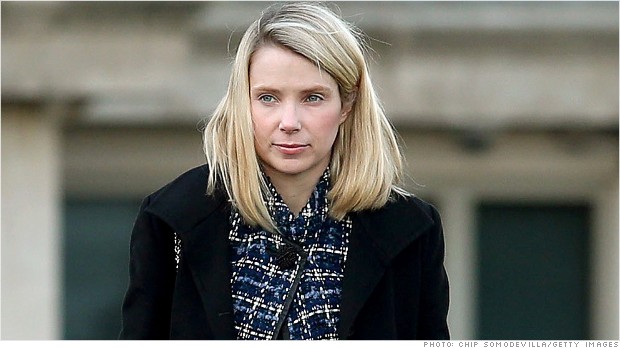
Marissa Mayer's Yahoo is being given the cold shoulder as it tries to take control of the popular French website, Dailymotion.

LONDON (CNNMoney)

The veto is the latest in a series of episodes that have undermined France's reputation as a place to invest and cast doubt on its claims that it is 'open for business'.

Industry minister Arnaud Montebourg told CNNMoney that he didn't want Yahoo (YHOO, Fortune 500) taking a majority stake in Dailymotion, a website that is likened to Google (GOOG, Fortune 500)'s YouTube.

Montebourg said he hoped a deal could still be reached where each side would have a 50-50 stake in Dailymotion. Yahoo had originally been insisting on a larger piece of the pie.

The French government owns a 27% stake in France Telecom (FTE), which owns Dailymotion through its Orange brand.

"We don't want to sell Dailymotion, we want to work hand-in-hand with Yahoo," Montebourg told CNNMoney. "We want a win-win situation - in other words - a partnership."

Related: Marissa Mayer's first-year pay hits $6 million

Yahoo would not comment on the status of the talks. Orange said in a statement it has been talking to various potential partners over the last few months as it seeks a strategic partner outside Europe to develop Dailymotion's reach.

Some reports say this would have been Yahoo's largest deal since Marissa Mayer took over as CEO in July 2012.

While the French government veto is a setback, it isn't a make or break situation for Yahoo, said Aaron Kessler, an analyst at Raymond James.

"There's obviously a lot of assets out there. Yahoo needs to continue to diversify, but it's hard to say that Yahoo's success would be based on just one acquisition," he said.

Dailymotion is amongst the biggest video websites in the world, receiving well over 100 million unique monthly visitors each month. Revenues grew by 55% in 2012.

Yahoo been trying to regain its status as a top internet property but has been struggling since its heyday in the late 1990s and early 2000s -- despite seven different CEOs.

It has recently made a handful of small acquisitions, dubbed 'acqui-hires' because they were focused on scoring the technical talent in the target company's workforce.

--CNN's Saskya Vandoorne contributed to this article. To top of page

First Published: May 2, 2013: 10:41 AM ET


22.16 | 0 komentar | Read More

The Chrysler-Fiat reversal of fortune

(Fortune)

The year 2007 resonates in Chrysler history for another reason: It was on May 14 that DaimlerChrysler publicly conceded the failure of its cross-ocean , cross-cultural merger by announcing the sale of 80.1% of the Chrysler Group to Cerberus Capital Management for $7.4 billion. At the time of the sale, Chrysler was worth only a fraction of its pre-merger 1998 price, and its fortunes only declined from there. Lehman Brothers went bankrupt a year later, and in the ensuing downturn the government was forced to pump billions of dollars into Chrysler in 2008 and 2009 before it filed for Chapter 11 bankruptcy reorganization on April 30, 2009.

The company nearly died on the operating table. As Steven Rattner related in his book Overhaul, the question of what to do about Chrysler was debated at nearly every meeting of the government's auto task force. After a close vote among economic advisers, the decision about its survival went to the Oval Office, where President Obama decided that Chrysler should be saved. "It was better to invest $6 billion for a meaningful chance that Chrysler would survive than to invest several billion dollars in its funeral," was the rationale, according to Rattner. Further cliff-hanging negotiations were required before the government agreed to pass 20% of Chrysler along with operating control along to Fiat, in exchange for Fiat's technology and management expertise.

Whatever contributions Fiat technology has made to Chrysler are hard to measure, but the impact of Fiat's management has been undeniable. Chrysler sales, which had fallen from 2.3 million in 2005 to only 931,402 in 2009, have rebounded smartly and reached 1.7 million last year. Under previous owners Daimler and Cerberus, Chrysler had been starved of investment and left with the weakest product line in the industry. CEO Sergio Marchionne smartly identified where he could most upgrade Chrysler's cars and trucks with the fewest resources and set Chrysler on its 37-month run. Though its passenger car lineup still lags the industry's best, Chrysler is now fully competitive in pickups and sport utility vehicles.

In other words, instead of being liquidated at the cost of some 300,000 jobs, Chrysler is now a viable company, thanks to Marchionne and Fiat -- which makes it all the more difficult to comprehend the heat of the dispute now consuming Detroit. Where once Fiat rescued Chrysler, now Chrysler is in a position to rescue Fiat, and it drives some people nuts.

MORE: 6 greenest cars made in America

That idea may have seemed far-fetched in 2009 but it is reality today, and Chrysler won't be the only company helping out a European carmaker. General Motors' (GM, Fortune 500) and Fords' (F, Fortune 500) North American operations are supporting Opel and Ford of Europe respectively. Europe's financial crisis combined with its aging demographic and the intransigence of labor unions in the face of overdue cuts in factory capacity have pushed even mighty Volkswagen into a tailspin.

With Europe deep in recession, Fiat, never a strong player to begin with, is drowning, and Chrysler is in the position of extending a life preserver. Fiat now owns 58.5% of Chrysler, and Marchionne wants to buy the remaining 41.5%. Owning 100% of Chrysler would allow him, under his agreement with the government, to finally integrate the two companies on one balance sheet. Chrysler is banking cash while Fiat is burning it, so Chrysler's cash would, in effect, be used to prop up Fiat.

To complicate matters, and to further inflame Detroit passions, the remaining 41.5% that Marchionne wants to buy is owned by a UAW voluntary employee beneficiary association trust (VEBA). The stock was given to the UAW as part of the 2009 government bailout to pay for retiree health care expenses. But there is a difference of opinion about the value of those shares. The UAW trust says they are worth $11.5 billion. Marchionne wants to pay quite a bit less: $4.68 billion.

The dispute has stirred emotions in Motown, where labor unionists fear that a settlement tilted toward Fiat will suck money out of their health care benefits. Indeed, the whole notion of American dollars bailing out an Italian company rankles some. Wrote popular blogger Peter De Lorenzo this week: "Gifted Chrysler by the U.S. Government and funded on the backs of you and me, the U.S. taxpayer, Marchionne is now using Chrysler to sustain that miserable excuse of a car company called Fiat."

MORE: 10 big car brands that bit the dust

What's been forgotten in the controversy is that it wasn't only Fiat that got a sweet deal in the Chrysler bankruptcy; the UAW did too. Here's how it went: According to one analysis, Chrysler's first-line secured creditors got only 29 cents on the dollar; its second-line secured creditors got nothing. Neither did its suppliers By law, the UAW, which figured it was owed $8.8 billion for the VEBA, should have gotten stiffed too. Its claim came after all the secured creditors. But Rattner's team didn't see it that way. Instead it awarded the VEBA 55% of the shares in the reorganized Chrysler, along with a note for $4.6 billion.

Rattner points out that the stock was held by the VEBA and not the union, and carried no voting rights. He goes on: "Most of the equity was unspoken for. We calculated that the UAW was taking a significant cut in its health care claim, at least 40%. Yes, the UAW accepted pain and risk."

A judge in Delaware will decide whose numbers to use: Marchionne's or the union, or something in between. Neither side should be aggrieved; they are both well ahead of where they would have been if the chips had fallen just a bit differently.

A ruling that falls closer to the union's claim would put it out of reach of Fiat's ability to finance. Still, you have to put your money on Marchionne. Having been trained as an accountant, he knows his numbers. He has proved on numerous occasions that he is a fearsome negotiator. And he seems determined to create an automotive enterprise with the scale to compete in the 21st century.

As he told analysts and reporters this week, "Whether we're the sixth or the largest car company in the world as a result of all this, it really does not matter. We are not running to league tables here. The only thing that does matter is that we do have within the combined entity, sufficient mass and sufficient geographic coverage to call ourselves a global car company."

Here's betting he will. To top of page

First Published: May 2, 2013: 10:22 AM ET

22.16 | 0 komentar | Read More

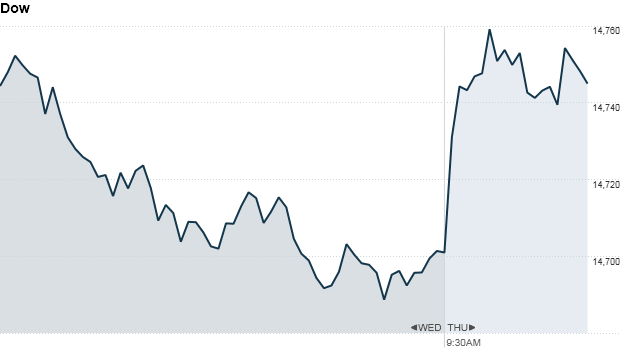
Stocks bounce back

Dow 10:03a

Click chart for more market data.

NEW YORK (CNNMoney)

The Dow Jones industrial average rose 0.5%, the S&P 500 gained 0.3%, while the Nasdaq added 0.7%.

As stocks bounce back from Wednesday's 1% sell-off, here are five things to know:

1. Jobless claims fall to 5-year low: First-time claims for unemployment benefits fell to the lowest level since January 2008, surprising economists who were expecting an increase and signaling further improvement in the job market. The good news comes ahead of the government's key monthly jobs report due Friday.

Economists surveyed by CNNMoney are expecting the report to show the economy added 140,000 jobs in April, up from 88,000 in March. They're expecting the unemployment rate to remain at 7.6%.

Click here for more on stocks, bonds, currencies and commodities

2. ECB cuts rates to record low: The ECB cut its key interest rate for the first time in 10 months in a bid to prevent the eurozone from falling even deeper into recession. The central bank was under intense pressure to cut rates.

European market were mixed in afternoon trading, but had been rallying since mid-April in anticipation.

The ECB's move follows the Federal Reserve's decision Wednesday to keep buying $85 billion worth of bonds a month, as part of its effort to stimulate the recovery. The central bank pointed to a high unemployment rate and low inflation as reasons to maintain its pace.

The Fed said it stands ready to either "increase or reduce the pace" of those purchases in response to economic activity.

Related: Fear & Greed Index idling in neutral

3. GM is doing a little better in Europe. General Motors (GM, Fortune 500) shares jumped more than 4% after the automaker's earnings showed progress in stemming losses in Europe, where a worsening recession has resulted in the worst industrywide auto sales on the continent in 20 years. GM CEO Dan Akerson pointed to cost-cutting measures and the successful introduction of new models for the improved performance.

In other earnings news, Yelp (YELP) shares surged after the review site reported a narrower loss and sales that topped estimates.

Facebook (FB) shares rose 3% after the company's sales jumped 38% in the first quarter, boosted by its growing mobile ad business. Facebook investors are laser-focused on mobile, which the social media company has said is the key to its future success.

Results are due in the afternoon from AIG (AIG, Fortune 500), Kraft Foods (KRFT) and LinkedIn (LNKD).

4. ING makes a lackluster debut on Wall Street: Shares of ING (VOYA) rose 0.4% on their first day of trading on the New York Stock Exchange. The U.S. arm of the Dutch bank raised $1.3 billion in its initial public offering, which priced below the expected range.

5. Intel gets a new CEO: Intel (INTC, Fortune 500) said that Brian Krzanich, currently the chipmaker's chief operating officer, will become the company's new CEO on May 16.

Current CEO Paul Otellini announced in November that he would be stepping down this month after 38 years at the company, the final eight of which were at its help. To top of page

First Published: May 2, 2013: 10:28 AM ET


22.16 | 0 komentar | Read More

Businesses were more hesitant to hire in April

Written By limadu on Rabu, 01 Mei 2013 | 22.16

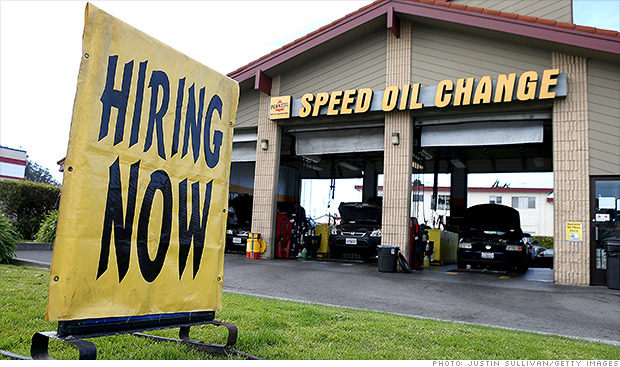
adp jobs hiring

Hiring by private businesses slowed in April, according to ADP's jobs report.

NEW YORK (CNNMoney)

Private sector employers added only 119,000 jobs in April, the weakest month for hiring since September, according to a report issued Wednesday by payroll-processing firm ADP (ADP, Fortune 500). That figure was a disappointment. Economists had expected the report to show the private sector added 150,000 jobs in April.

According to ADP, manufacturers alone cut 10,000 jobs. But construction firms hired 15,000 employees.

Meanwhile, March hiring was revised lower to show private employers added 131,000 jobs, 27,000 fewer jobs than reported earlier.

Hiring has slowed particularly among small businesses with 20 to 49 employees. They hired only 17,000 workers in April. This phenomenon could be partly due to health care reform measures. The law requires businesses with 50 or more full-time employees to start providing insurance in 2014, or face fines.

"That 50-employee threshold is important and it feels like health care reform is having an impact," said Mark Zandi, chief economist for Moody's Analytics. "If you look at the slowdown in job growth in the last few months, it's primarily among companies that are small."

Small business owners continue to say taxes and government regulations are their two biggest problems, according to a monthly survey by the National Federation of Independent Business.

These are weak signs ahead of the key monthly jobs report released by the Labor Department on Friday. Unlike ADP's data, that report also includes jobs figures from federal, state, and local governments.

Overall, governments have cut 80,000 jobs over the past six months. Economists surveyed by CNNMoney expect Friday's report to show the government cut another 10,000 jobs in April. To top of page

First Published: May 1, 2013: 8:38 AM ET


22.16 | 0 komentar | Read More

Stocks: Investors begin May by selling

NEW YORK (CNNMoney)

With worries of another spring swoon on the mind, investors began May by taking a step back. The Dow Jones industrial average fell 0.4% Wednesday morning, while the S&P 500 slipped 0.3% and the Nasdaq declined 0.1%.

Fears of a pullback have been growing, as stocks have been on a tear for the past several months. The S&P 500 closed April at a record high, the Nasdaq finished at its highest level in more than 12 years, and the Dow ended just a hair below its all-time high. But those milestones have been reached amid a still-fragile economy.

Investors are waiting for the Federal Reserve's policy-making committee to wrap up its two-day meeting for any signs as to how long it will continue its aggressive monetary policies. The market is widely expecting the central bank will continue its bond buying program to keep supporting the U.S. economy.

Related: Fear & Greed Index gets greedy

Investors will also look to a handful of economic reports that come ahead of the government's monthly jobs data due Friday.

Payroll processor ADP published its monthly data on private-sector jobs, showing that only 119,000 jobs were added in April, below forecasts.

Also, the Fed will release data on construction spending at 10 a.m. ET.

In corporate news, CNNMoney parent Time Warner (TWX, Fortune 500) reported a dip in first quarter sales but a jump in profit, propelled by "The Hobbit: An Unexpected Journey," a box office hit surpassing $1 billion.

Genworth Financial's (GNW, Fortune 500) stock price surged after the company said that its quarterly profit more than doubled.

Comcast (CMCSA) reported an increase in profit and revenue, which the company attributed to the success of video and high-speed internet subscriptions.

Shares of MasterCard (MA, Fortune 500) slipped, despite the credit card company reporting a quarterly increase in sales and profit.

Facebook (FB) is on deck to report earnings in the afternoon.

Apple's (AAPL, Fortune 500) stock price edged down, a day after rising more than 3% ahead of it record $17 billion bond sale.

Related: Marissa Meyer's first year pay: $6 million

Most European markets are closed for a holiday, but the U.K. remains open and its benchmark index, the FTSE 100, is pushing ahead with some modest gains.

"Today will likely be fairly quiet as it seems like most of Asia and much of Europe are on holiday," said Deutsche Bank analyst Jim Reid, in a note to investors.

In Asia, Japan's Nikkei declined 0.4%.

Exchanges in Hong Kong and Shanghai were closed. The Chinese government reported disappointing manufacturing numbers for the month of April, with purchasing managers indicating a slowdown in growth. To top of page

First Published: May 1, 2013: 9:49 AM ET


22.16 | 0 komentar | Read More

Pimco's Bill Gross gets bullish. Sorta.

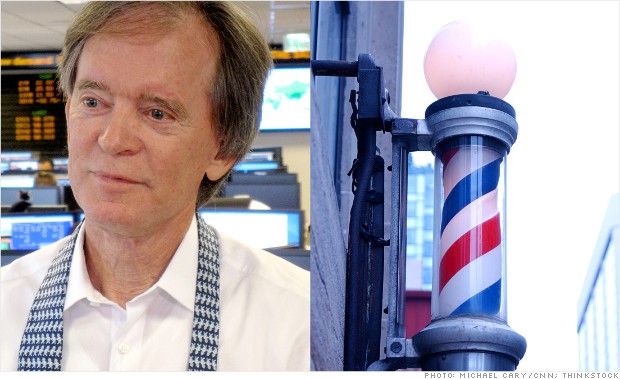
bill gross haircut

Pimco's Bill Gross says investors should stay in the market, but trim their risk.

NEW YORK (CNNMoney)

After telling investors for months why they should stay out of the financial markets, Gross, who runs Pimco's Total Return Fund (PTTRX), is changing his tune.

Gross wrote in his monthly investment letter that investors in stocks and bonds have to recognize there are risks. But the alternative is to "quit the game and earn nothing."

Gross noted that the Federal Reserve and other central banks have been supporting stocks and bonds through various stimulus programs -- and that is unlikely to change soon.

"Pimco's advice is to continue to participate in an obviously central-bank-generated bubble but to gradually reduce risk positions in 2013 and perhaps beyond," he added.

Treasury bonds, he says, "are a better bet than the alternative (cash) as long as central banks and dollar reserve countries (China, Japan) continue to participate."

Related: World's 5 hottest stock markets

Rather than his usual musical references, Gross used the "Good as Money" ad for Twenty Grand Cognac as his inspiration. "Being a beer drinker, and never having cashed in a Budweiser to pay for a fill-up at the local gas station, I said to myself 'Man, that must be really good stuff.'"

"It seems the definition of money has been extended, not perhaps to a bottle of Twenty Grand Cognac, but at least to some other rather liquid forms of near currency," including money market funds, stocks and Treasuries that can be converted rather quickly into cash. But Gross worries that these investments may not turn out to be "good as money" if the bubble bursts.

Related: Dr. Doom: Buy stocks while you can

Even if stimulus programs around the world, and near zero-bound yields help boost the global economy, Gross says the revival will be done through haircuts. Along those lines, the title of Gross' latest outlook was "There Will Be Haircuts", which appears to be a nod to the movie "There Will Be Blood."

"These haircuts are hidden forms of taxes that reduce an investors' purchasing power as manipulated interest rates lag inflation," he said. Those actions "theoretically reduce real debt levels as well as excessive liabilities of levered corporations and households." But they can also be viewed as "a hidden wealth transfer."

Related: Best investments in the world

Gross specifically called out four such haircuts.

First up, negative real interest rates, or as Gross calls it "trimming the bangs." While central banks have been doing all they can to inject some life into the economy, the Treasury's average cost of money keeps grinding lower. At some point, Gross feared that investors may find themselves paying the government to keep their money "safe."

More pop culture references followed. Gross called the risk of inflation and currency devaluation the "Don Draper," referring to the "Mad Men" character's style (and inflation worries) as "something that's been around for a long time and we don't really give it a second thought."

Gross also fretted about the likelihood of more capital controls from governments, such as the controversial tax on bank deposits in Cyprus. Finally, he said that outright default by governments whose central banks are buying stocks is a possibility.

His concluding advice? Don't completely bail on stocks or bonds. But start to cut back ... unless you want to get slaughtered like customers of the murderous barber of Broadway fame.

"Give your portfolio a trim as the year goes on," Gross wrote. "In doing so, you will give up some higher returns upfront in order to avoid the swift hand of Sweeney Todd. There will be haircuts. Make sure your head doesn't go with it." To top of page

First Published: May 1, 2013: 10:58 AM ET


22.16 | 0 komentar | Read More

Legal marijuana's need for high security

Written By limadu on Senin, 29 April 2013 | 22.16

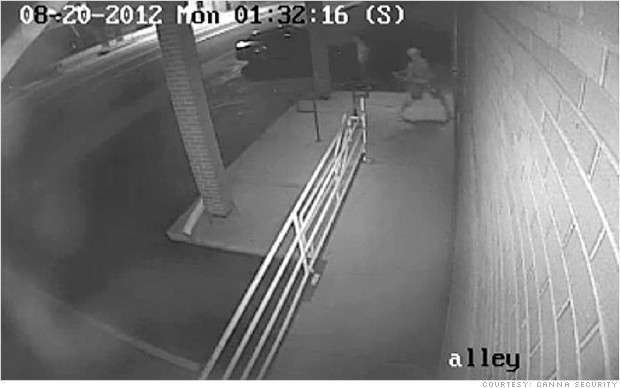
marijuana security

The high value of marijuana, and the cash that businesses are forced to keep around, makes them a target for thieves.

SEATTLE (CNNMoney)

Without extensive security, a pot dispensary is nothing more than a giant target. A pound of weed goes for more than $2,000 wholesale. And federal pressure on banks forces growers and stores to rely almost entirely on cash.

A robber who swipes the jars on display alone could make away with $20,000 of product, plus whatever stacks of bills are behind the counter.

Dispensaries bulk up as much as they can.

A typical store has more than a dozen cameras, motion detectors, infrared sensors and flood lights. Some even line the ceilings with tripwire to avoid rooftop burglars sawing their way in. At most dispensaries, no one gets in without passing by three doors, showing identification and presenting a doctor's note.

But that security is hard to maintain. Some store owners who use ADT, the nation's largest security provider, say the company has dropped them in recent months. ADT told CNNMoney it won't "sell security services to businesses engaged in the marijuana industry because it is still illegal under federal law."

Related: Is marijuana legal or not?

Kevin Griffin, founder of West Coast Wellness, said ADT dropped him without warning in mid-April. He still has a silent panic alarm button Velcro-strapped beneath the front desk -- but it doesn't call anyone.

Griffin blasts ADT, saying, "They already knew what we were. We were completely transparent. It's not fair to put us in a jam and not give us any time to prepare."

The security needs create an opportunity for startups like Canna Security, a Colorado company currently expanding to Washington. It's founder, Daniel Williams, recalls the video cameras that catch footage of what pot stores and growers are up against.

There were teenagers who rammed an Audi into a warehouse, bursting through its door. They walk out having discovered that the marijuana plants they intended on stealing were actually moved elsewhere the previous day.

Then came the cat burglar who cut a hole in the roof of another marijuana warehouse and rappelled down from the rooftop. After filling a duffel bag full of the stuff, he realized the doors were locked from the outside. He couldn't climb back up to escape.

Next came the ninjas who robbed a dispensary in broad daylight then sped off on street bikes.

"We get the goofballs," Williams said.

But Williams stresses that the losses to these businesses are no joke. Demand for his services is on the rise. Williams' employees are working 12-hour shifts every day, installing cameras and alarm systems across both states.

His biggest concern is his inability to finance his company's rapid growth. Williams discovered that when his bank -- which gladly accepted his cash deposits -- recently denied him a credit line.

"I'm concerned that we'll get too much business and won't be able to manage it," he said. "It gets frustrating when I get a whole new channel of business and funding isn't there to adjust to it."

Related: Legal marijuana: An all-cash business

Meanwhile, dispensaries like West Coast Wellness have few options. For Griffin, this heightened level of risk is nothing new. It's an industry on the fringes of legality, and uncertainty is the name of the game. He reminds this reporter that he stands much to lose from robbers as from federal authorities eager to shut him down.

"They're worse than criminals," Griffin said. "They have the right to walk through the front door and take whatever they want." To top of page

First Published: April 29, 2013: 9:28 AM ET


22.16 | 0 komentar | Read More
techieblogger.com Techie Blogger Techie Blogger